
On Rewrites
The power of consensual, and non-consensual rewrites. What you have to do before you can fully turn the page.

Note: This may or may not replace next week’s post. Enjoy!
Rewrites are powerful things. Sometimes they’re consensual, sometimes they’re non-consensual. There’s also a point at which they are no longer helpful.
It’s not healthy, or productive, for me to continue living in this rupture that started with being sexually assaulted. I stepped out of it a little bit when I wrote words on Burning Man, and I felt a lot better.
I think on some level I thought that what I’ve been doing with all these words has been consensual rewrites: ones that would compensate for the non-consensual ones that have been going on behind closed doors. Now I think it’s been far closer to re-litigation.
Whether your metaphor is literary or legal, there comes a time when you have to turn the page.
I think most people think therapy and healing is a linear process. There’s a start and a finish line, you know? X sessions of therapy, maybe Y forms of medication, and you hit the end and you move on.
Reality is a lot messier than that. 3 years of 3 different therapists, and I could see the finish line. I could almost taste it. DBT would wrap up, and then things would really start moving forward. I wouldn’t look on these 3 years as a sink of wasted time anymore, but just see them as time that had passed.
Finding out one piece of information was enough to shred the bandage I had worked so hard on building. I was reminded that a wound was still very much there.
That wound goes further than just not being cared for in the way I should have been; the way that other people in that same community were. It was the active cruelty in not just saying this was your fault, but being made an example of.
Only very recently, have I been able to hold thoughts like girl, you were sexually assaulted. their feelings got hurt. these are not in the same ballpark, league, or sports category.
Seeing people use bad faith or self-righteous to paper over what happened to me left a mark. People writing threads in support of non-empathy left a mark. Being told that it’s not our fault you had a fucked up childhood or because someone else hurt you, you are as dangerous as a rapist and need to be isolated left several marks.
Those may never go away. I know another woman who has spent 7 years dealing with what happened to her and she still has bad days; I’ve spent maybe a year actively doing so.
I thought the days of that wound driving my decisions were over, but they aren’t. Endless re-litigation isn’t going to fix that.
There’s also not really any venue for it. The makeshift courtroom of public-private opinion that assembled after I came forward has since disappeared. The world I grew up in, the one based on consensus morality, is gone.
Is a lawyer still a lawyer, if their closing argument is given in an empty warehouse to an audience of no one?
Is a writer still a writer, if their rewrites say the same thing as the first draft? Or worse, say nothing at all?
I was part of something that achieved global change in a big, but still manageable problem. Drug legalization is a big and complicated monster, to be sure, but it does have some well defined edges.
The issue of sexual violence is… not that.
I’ve done what I can in my little corner of the world, but the systems that enable it are still out there. They now enjoy a resurgence.
When I’ve posted my work in adjacent communities it has never come with a ‘DM me if you see yourself in this’. There is a huge barrier for a woman to overcome to message another, unprompted, with a #MeToo message. To tell a stranger about a traumatic experience.
I’ve taken those moments very seriously. I thought, once, that the solution was more speech. That there was a solution. I no longer think that.
The problem is a coordination issue. Kathy Forth was right in saying you have to care a lot about this stuff to fix it. Most people don’t. They aren’t forced to until something bad enough happens to someone not-disposable enough and then chaos usually ensues.
All I can really offer is more speech. It feels like disappointment to those women that have trusted me with their stories. I feel like a disappointment. There should be more that I can do, but there isn’t.
It’s also something that I don’t have capacity for anymore; the last few years have certainly been a few decades. Now that it’s available to me, I have to devote as much of myself as possible to healing from multiple points of trauma, including sexual / regular assault.
This is over, as much as it ever will be for me. The problem with a consensual rewrite is that you’re doing the work, but all the people around you end up being your editors. They’ll either accept the rewrite, or reject it.
Regardless of what your editors say, though, you eventually do have to turn the page so you aren’t rewriting the same story for the rest of your life.
That metaphor is also a literary way of saying that there will be consequences. Some possibly severe. Some probably permanent. I can live with them.
I wasn’t able to keep living with the alternative. Which was, basically, some coerced acceptance. Some others might say it was agreement.
I met Inna Mosina on Farcaster. She’s the first person in Russia to be prosecuted under the anti-LGBTQ+ laws there, and was jailed for posting a pride flag on her social media. She once told me something really important: to surrender is to agree.
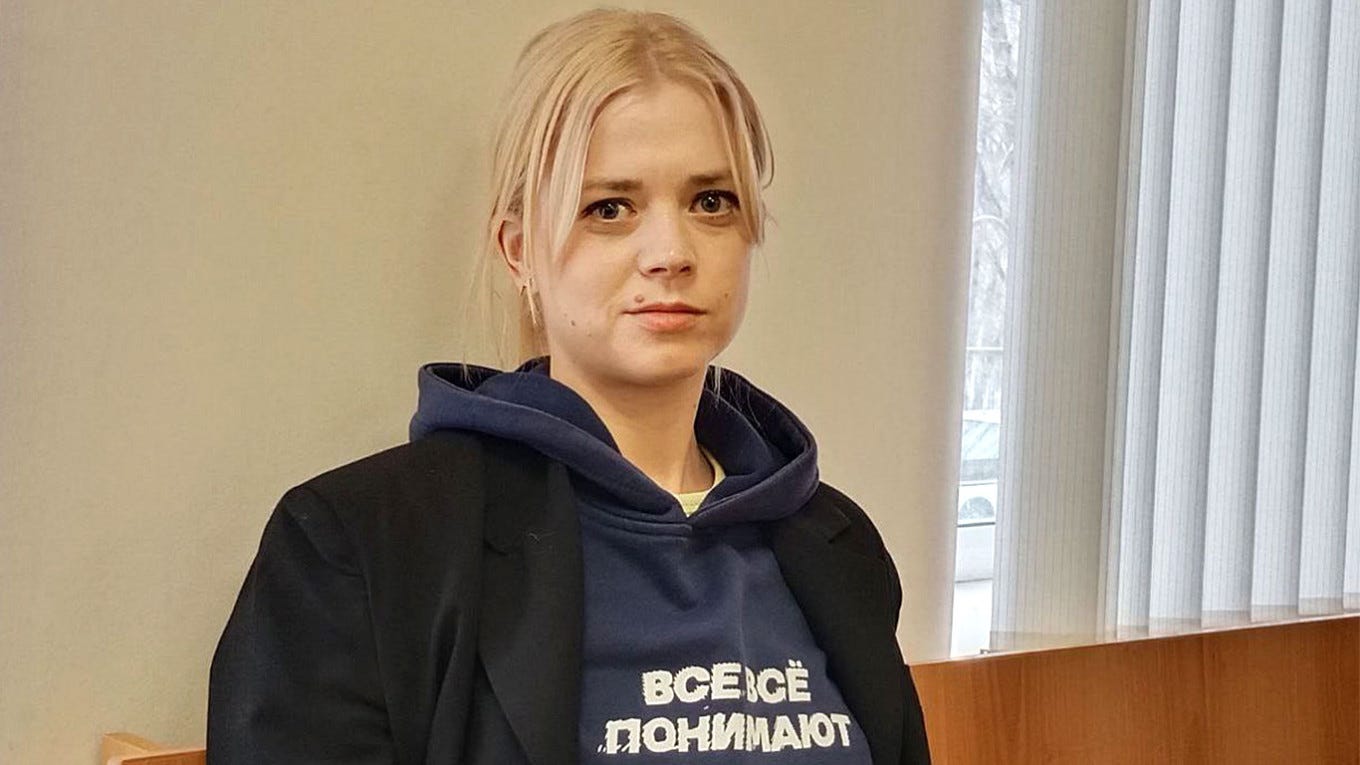
The un-easy detente which has held until very recently felt like agreement to me. That I had done something wrong. That I was wrong for objecting to the actions of a man in a dark corner of a music venue. Not demanding a verdict, or retribution, or even acknowledgement, but just objecting.
You can say you disagree once, and it means something. I’ve come to think that beyond a certain point, the more times you say it, the less that it means.
I never found out any definitive answer to the big question: when should you come forward?
The answer is it depends, which might as well be no answer at all.
What I did find out is that you always have a choice. There’s always something you can do, even if it’s just telling your story to whoever will listen. It doesn’t mean the outcome will be positive, or give you what you want.
It means that when people try to convince you that you have no agency or power left, they are always wrong. Within that truth, you have choices to make.
Those choices will bring consequences; maybe that’s where the real decision lies.
All I can say for sure is that for me, consequences are a lot easier to live with than non-consensual rewrites.
Current mood: 😌 relieved
Current music: System Shock 1 Remake OST